Turning Your First Draft Into A Physical Book
"...while I’m out running errands having the book on hand serves as this constant little jolt of “I want this book out on the world, tucked into another girl’s tote bag, or sitting on another girl’s overstocked bookcase.”"
I’ve talked before about the joy I get receiving a physical copy of my book (in draft form) and how it marks an important milestone in my writing journey that my ADHD brain needs to fuel the overall motivation. However, I do have additional motives for doing this–and perhaps these reasons will speak to you as well.
First, let’s talk about the cost, because I understand printing a whole book isn’t a financially viable option for many writers, so I wanted to get this out of the way first.
When I was a child, I would quite literally print out my pages, grab some cardboard, and sit on the floor surrounded by glue, staples, and coloured pencils, piecing together my book by hand.
Thankfully, things are a little easier these days because I can just print my drafts through Lulu Publishing. They allow you to print personal projects through their site (without retaining any rights to your story whatsoever).
(This is not sponsored, by the way. Use whatever method of printing works best for you!)
If you are curious about the costs, here are the specs for my larger & smaller projects:
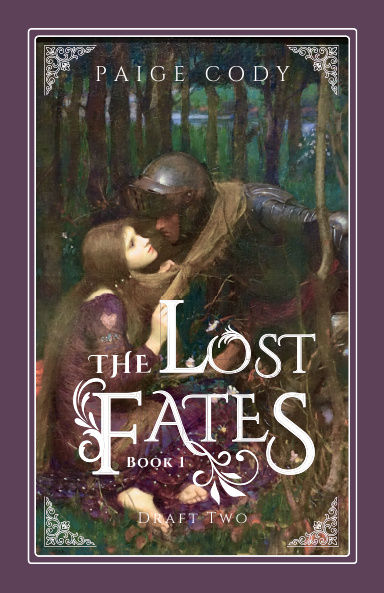
The Lost Fates
Book, 423 Pages
Print Book: Digest (5.5 x 8.5 in / 140 x 216 mm), Black & White, 60# White — Uncoated, Paperback Perfect Bound, Matte Cover
Print Cost:20.01 CAD (Not including shipping)

Once Upon a Paper Crown
Book, 126 Pages
Print Book: Digest (5.5 x 8.5 in / 140 x 216 mm), Black & White, 60# White — Uncoated, Paperback Perfect Bound, Matte Cover
Print Cost:8.57 CAD (Not including shipping)
I’ll go through the process of designing and ordering my drafts in a separate article. For now, let’s discuss the method to my madness.
Yes, this really does make my ADHD brain happy!
Holding something tangible in my hands validates the blood, caffeine sweats, and tears of frustration and joy that went into wrangling the first draft together in the first place.
As writers, we often put off all the celebrating until the book is complete, but we should all remember that just completing your first draft is a Big. Fucking. Deal.
And while there are still those micro-milestones along the way (completing your plan, finishing a scene, writing your first chapter, hitting your first 20k words, etc.) those benchmarks exist primarily in the digital works, and for whatever reason, they just aren’t enough to trick my brain into chasing the carrot.
To put it more simply, seeing “80,000 words” displayed on my word count tracker pales in comparison to holding 423 pages in my bare hands.
It gets my out of writer/editor brain and into reader brain
After completing each draft, I give it a good resting period to breathe and get it out of my head so that when I receive the physical book, I can experience it through the eyes of a reader–or at least as close as I can possible get.
The goal for my second draft is to fix the “big picture” stuff. To do this I need to identify which pieces aren’t fitting together, what plot holes are still unaddressed, which gaps need to be filled, gutted, or redone, and whether the overall pacing is working.
The method that has worked best for me is reading through the entire book once–without taking notes or altering anything along the way (very difficult, I know). No editing. No rewriting. No agonizing over that one sentence that’s the worst sentence ever written in the entirety of humanity...
Just reading.
Doing this allows me to actually absorb and reflect on the story as a whole, rather than getting caught up in the little details. Then, when I go back through it a second time, I can be much more intentional with my notes, identify the bigger issues, and put together a proper list of changes for my next draft.
It fuels the dream through manifestation
Seeing the book sitting on my shelf, or nestled in my tote bag while I’m out running errands, serves as this constant little jolt of “I want this book out on the world, tucked into another girl’s tote bag, or sitting on another girl’s overstocked bookcase.”
For my ADHD brain, out of sight is truly out of mind. When I’m in the throes of writing a story, I try to surround myself with myself with dual reminders to keep one foot in the world. A themed playlist blasting in the car, a phone background that matches the aesthetic, my novel planner always within reach… you get the idea.
And having a physical cop of the book? Well, that’s just the cherry on top. It’s a tangible little reminder of what I’m working toward, and a glimpse of what I might feel like when the story finally exists beyond my own imagination.


Comments